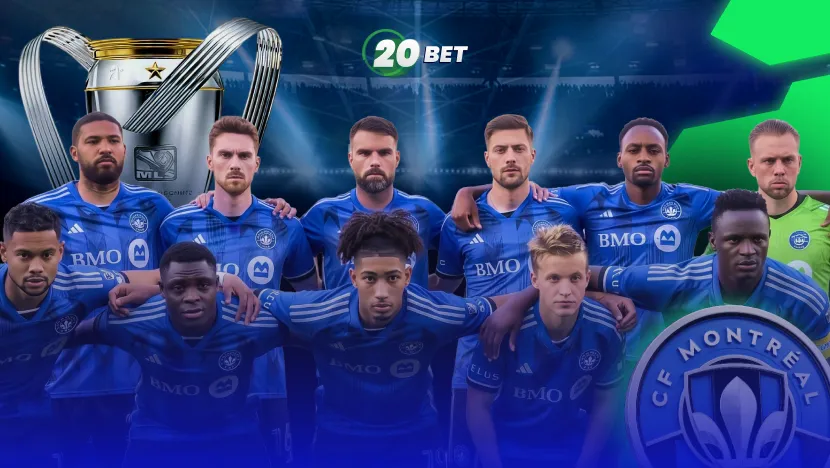
If you follow MLS, you may have noticed how often CF Montréal end up in the same kind of trouble. The issues don’t come down to one coach or one poor signing. Instead, they stem from ownership choices, weak planning, and deeper structural issues. So, if you are wondering why CF MTL keep sliding, the answer starts with how the club is being run.
This article explains why CF Montréal keep failing in MLS and what must change for the club to compete again.
CF Montréal’s Decline in Recent MLS Seasons
Before looking at the causes, it is better to start with the trend. Since the 2026 season began, CF Montréal’s results have shown the same old pattern. The poor run does not look like a short dip in form. In Montréal’s case, the early signs suggest that the slide from previous seasons has carried over. The numbers from the last few seasons make that clear.
Results and League Position Overview
In 2025, CF Montréal finished 13th in the Eastern Conference with six wins, 18 losses, and 10 draws. That was the fourth time they missed the playoffs in five years.
Now in 2026, early statistics again point toward a difficult season. The table summarises the opening stretch:
| DATE | OPPONENT | RESULT | NOTE |
| 22 Feb 2026 | San Diego FC (A) | L 0-5 | Season opener |
| 1 Mar 2026 | Chicago Fire (A) | L 0-3 | Bad run continued |
| 9 Mar 2026 | NY Red Bulls (A) | W 3-0 | First league win of the season |
| 11 Apr 2026 | Philadelphia (H) | L 1-2 | Home opener; Donadel was sacked the next day |
Why the 2026 Season Became Another Crisis
The 2026 season started much like several recent seasons. Early CF Montréal games told the same story: one win and six losses from the first seven matches. The CF Montréal score against Philadelphia was 1-2 in the home opener, and that result pushed the club into another crisis. Marco Donadel was let go the next morning.
The Ownership Problem
A lot of CF Montréal’s problems trace back to ownership, finance, and long-term planning. The club has not invested at the same level as several MLS rivals, and that affects squad depth, recruitment, and the quality of players available to each coach. When the investment is cautious, the margin for error becomes smaller.
Joey Saputo’s Priorities and Investment Strategy
Joey Saputo has been the central figure behind the club for many years. The question supporters continue to ask is simple: does the club’s investment match the strategy needed to compete in MLS? Right now, the answer appears to be no.
Lack of Spending Compared to MLS Rivals
CF Montréal’s budget remains modest compared to many bigger MLS clubs. Transfermarkt’s 2025-26 figures show the gap clearly. Inter Miami’s incoming transfers were valued at roughly €39.00 million ($45.27m), while LAFC’s arrivals totalled approximately €27.84 million ($32.31m). CF Montréal’s signings, by comparison, were valued at about €2.46 million ($2.86m).
Squad depth, ownership backing, and transfer spending all shape what a coach can do over the course of a long season. The issue is not only revenue. It is also about how much ownership is willing to invest in the team. That is one reason a CF Montréal vs Inter Miami or CF Montréal vs LAFC matchup can feel unbalanced before kickoff — the gap in squad investment shows up in the final score.
How Multi-Club Ownership Affects CF Montréal
When an owner is responsible for multiple clubs, choices have to be made. Time, money, and attention may be directed more heavily toward one project, leaving another with fewer opportunities to grow.
Joey Saputo’s involvement with Bologna FC 1909 in Italy has only intensified those concerns. According to Transfermarkt’s 2025-26 data, Bologna’s incoming transfer spending was about €51 million ($59.2m), which makes CF Montréal’s figure look even more modest.
That gap does not prove neglect on its own, but it does raise fair questions about governance, priorities, and where CF Montréal fit within the broader Saputo sporting portfolio.
Constant Coaching and Sporting Instability
This problem comes from inside the club. Frequent coaching changes have made it hard for CF Montréal to build rhythm, trust, and a clear soccer plan.
The Problem With Frequent Managerial Changes
Marco Donadel became another short-term CF Montréal coach in a long line of changes since the club joined MLS in 2012. He first took over as interim coach in March 2025, was made permanent head coach in October 2025, and was let go in April 2026. That cycle creates instability and leaves little room for any long-term plan to settle.
Lack of Long-Term Football Identity
Frequent coaching changes make it hard for the team to build one clear identity. Every new coach brings new tactics, new ideas, and a different way of playing. When that happens too often, the players keep adjusting instead of growing within a stable system. The performance on the pitch usually suffers.
Why Rebuilds Keep Failing
The club has tried several rebuilding plans, but too many have been dropped before they could settle. The problem is that there is no clear blueprint carried from one project to the next. Without proper evaluation, the club keeps changing direction without fully learning why the last plan failed.
Squad Building Issues
Squad planning also becomes complicated when managers keep changing, because each coach may need a different type of player. When a new manager comes in, the existing roster may not always fit the style he wants to play. As a result, coaches often inherit players recruited for a previous system, creating a squad that can feel unbalanced and lacking a clear direction.
Poor Recruitment and Roster Construction
The club’s recruitment process has not looked consistent enough. A new group of players seems to arrive almost every season, but not every signing has solved the problem it was meant to fix.
For example, CF Montréal acquired Giacomo Vrioni from New England Revolution in January 2025 to strengthen the attack. Four goals in 10 matches was not a bad return for a new forward still settling in, but the move still did not give the club a lasting solution. When he was not kept for 2026, Montréal had to look for another answer up front again.
With so much change, the players do not always sync as a team. The CF Montréal roster can look like a different group from one season to the next.
Selling Key Players Without Proper Replacements
The club has often lost important players without bringing in clear replacements. For example, before George Campbell’s July 2025 move to West Bromwich Albion, many supporters saw him as one of CF Montréal’s best players in the back line. His departure highlighted another recurring issue: player retention.
As a result, CF Montréal rumours often focus on who might leave next instead of which proven MLS player could arrive to steady the squad.
Dependence on Young Talent and Short-Term Fixes
The club has done good work with its academy and player development. For example, Nathan Saliba was only 21 when he became a regular starter before his 2025 move to Anderlecht. Jalen Neal, also 21 when he joined, and Hennadii Synchuk, 19, show the same pattern of young CF Montréal players being asked to grow quickly in important roles. The problem is that leaning too much on young talent can place heavy pressure on them before the squad around them is stable enough.
Structural Problems Beyond the Pitch
CF Montréal’s issues are not only about players and coaches. Some of the pressure also comes from the stadium, infrastructure, attendance, and the way the club connects with supporters. These off-field issues can make the soccer problems harder to fix.
Stadium and Market Challenges
Stade Saputo is not built for easy winter scheduling, so CF Montréal often begins the season with long road stretches. In 2026, the club had to wait until April 11 for its home opener. That kind of start can hurt rhythm, confidence, and attendance before the home crowd even gets a proper run of games.
Fan Frustration and Declining Interest
Supporters can accept a bad season when they see a clear plan. The problem is that fans have watched too many resets, coaching changes, and short rebuilds. That’s why much of the latest CF Montréal news has focused on frustration, declining trust, and concern over attendance.
How MLS Growth Has Left CF Montréal Behind
MLS has grown quickly in recent years, with more spending, stronger squads, and better club infrastructure. Montréal have not kept pace while rivals with bigger budgets and clearer planning have moved ahead.
That gap is also reflected in match analysis and betting markets. On sportsbooks such as 20Bet, factors like squad depth, current form, and organisational stability can all shape how a match is viewed before kickoff.
The league standings show how far the team still have to go. As of June 12, 2026, CF Montréal sit 14th in the Eastern Conference with only 12 points from 14 matches.
| Position | Team | Played | Wins | Draws | Losses | Points |
| 1 | Nashville SC | 15 | 9 | 4 | 2 | 31 |
| 2 | Inter Miami CF | 14 | 9 | 3 | 2 | 30 |
| 3 | Chicago Fire FC | 15 | 8 | 4 | 3 | 28 |
| 4 | New England Revolution | 15 | 8 | 4 | 3 | 28 |
| 5 | New York Red Bulls | 15 | 7 | 4 | 4 | 25 |
| 6 | Charlotte FC | 15 | 7 | 3 | 5 | 24 |
| 7 | New York City FC | 15 | 6 | 4 | 5 | 22 |
| 8 | D.C. United | 15 | 6 | 3 | 6 | 21 |
| 9 | FC Cincinnati | 15 | 6 | 2 | 7 | 20 |
| 10 | Columbus Crew | 14 | 5 | 3 | 6 | 18 |
| 11 | Toronto FC | 15 | 3 | 6 | 6 | 15 |
| 12 | Atlanta United | 14 | 3 | 4 | 7 | 13 |
| 13 | Orlando City | 14 | 3 | 4 | 7 | 13 |
| 14 | CF Montréal | 14 | 3 | 3 | 8 | 12 |
| 15 | Philadelphia Union | 14 | 1 | 4 | 9 | 7 |
The 0-5 opening-day result in a CF Montréal vs San Diego FC fixture — against a club in only their second MLS season — illustrated how quickly that gap has grown.
What CF Montréal Must Change
A stronger strategy should start with four things:
- A multi-year plan
- One consistent playing style
- More proven MLS recruits
- Open communication with supporters
Investing in a Stable Sporting Project
The club needs to commit to a long-term vision. That means backing the sporting director, setting a clear plan, and giving the project time to settle.
Creating a Clear Club Identity
CF Montréal need one clear soccer identity. The club must decide how they want to play, what kind of players fit that style, and which tactics should guide recruitment. A clear identity will not fix everything at once, but it can give every coach and player a better structure to work with.
Improving Recruitment and Player Retention
The club needs better recruitment and stronger retention. They must bring in more proven MLS players and work harder to keep the players who still fit the project.
Rebuilding Trust With Supporters
Supporters want clear communication, honest direction, and proof that the club has a real plan. Trust will return only when better decisions lead to better results on the pitch.
Responsible Gambling
Betting should be entertainment, not a way to make money. Gambling can be addictive—only bet what you can afford to lose, and never chase your losses. Set deposit, loss, and time limits before you play, and take regular breaks.
If gambling stops being fun or starts affecting your finances, relationships, or wellbeing, seek help immediately.
Support available across Canada:
- Responsible Gambling Council: responsiblegambling.org (national resource center)
- British Columbia: Call 1-888-795-6111 (24/7)
- Alberta: Call 1-866-332-2322 (24/7)
- Quebec: Call 1-800-461-0140 (24/7, bilingual)
- Saskatchewan: Call 1-800-306-6789 (24/7)
- Manitoba: Call 1-800-463-1554 (24/7)
- Atlantic provinces: Call 1-800-461-1234 (NB), 1-888-429-8167 (NS), 1-855-255-4255 (PE), 1-888-899-4357 (NL)
- Additional support: Gambling Therapy (gamblingtherapy.org), Gamblers Anonymous (gamblersanonymous.org)
- 988 Suicide Crisis Helpline: Call or text 988
20Bet provides responsible gambling tools in your account settings, including deposit limits, loss limits, time limits, cool-off periods, and self-exclusion. Use them.
Age restrictions: You must be 19 or older to gamble in British Columbia, Saskatchewan, and Atlantic provinces. You must be 18 or older in Alberta, Manitoba, and Quebec. Underage gambling is illegal.
20Bet is licensed and regulated by the Kahnawake Gaming Commission. For more information about responsible gambling practices and support resources, visit the Responsible Gambling section on 20Bet.

FAQ
Why Has CF Montréal Struggled So Much in MLS?
They have struggled because of tight budgets, frequent coaching changes, weak squad planning, and no clear long-term identity. The club has talent, but the structure around that talent has not been stable enough.
Is Ownership the Main Issue at CF Montréal?
Ownership is one of the main issues because it shapes investment, governance, recruitment, and long-term strategy. Joey Saputo is not the only factor, but the club’s direction starts from the top.
Why Does CF Montréal Change Coaches So Often?
They change coaches when results fall quickly, but that has not solved the deeper problem. Marco Donadel’s exit in 2026 showed again that the club needs a stable plan, not just another reset.
Can CF Montréal Become Competitive Again in MLS?
Yes, CF Montréal can become competitive again in MLS, but only with better recruitment, stronger retention, smarter funding, and patience. The supporters are still there. What they need is proof that the club has a real plan.


Related Posts
See All-
 07/04/26
Can Vancouver Whitecaps Make a Deep MLS Playoff Run Or Even Win the Season?
After a historic 2025 MLS Cup run, the Vancouver Whitecaps are back. Explore their 2026 standings, key player updates and playoff predictions.
-
 12/05/26
Can Tata Martino Fix Atlanta United’s Collapse — or Is 2026 Already a Lost Season?
Atlanta United faces a historic collapse in 2026. Can Tata Martino fix the tactical gaps and defensive woes, or is the season already lost? Read our deep dive into the stats, squad imbalances, and playoff chances.
-
 26/06/26
 -
 22/04/26
What Went Wrong for the LA Galaxy — And How They Fixed It
How did the 2024 MLS Cup winners fall to last place? Discover the injuries, salary cap issues, and tactical shifts that defined the LA Galaxy.
Choose a language Done Subscription successful! Stay tuned for our exciting news and offers.
Error We’re sorry, something went wrong. Please try again later.